
Barbican Review 14 October 2026
There isn’t much to look at when you first enter the theatre. A pair of boots, a microphone on a stand, a dozen or so black buckets covered in mud, a single lightbulb hanging from a long cable and a rope suspended in an arc across the stage. Just before the performance begins, two figures emerge and spread a muddy tarpaulin across the floor. Welcome to the farm.
Tom at the Farm, written by Michel Marc Bouchard, is presented here in a Brazilian production performed in Portuguese with English surtitles. It’s a dark, unsettling exploration of grief, sexuality, repression and violence, with some unexpected moments of humour along the way.
Tom arrives at the isolated farm following the death of his partner. He begins by describing the surroundings, pointing out details of the house that we cannot see, almost as though recalling a memory, despite never having visited before. He speaks his thoughts aloud, sometimes addressing his dead partner through his phone, desperately trying to maintain a connection with someone who is no longer there.
We soon meet the deceased man’s mother and brother, and the central conflict becomes clear. His mother has no idea her son was gay, let alone that Tom was his partner. His brother Francis knows the truth but insists that Tom keep it hidden. Instead, they must pretend that a woman called Hannah was the girlfriend, conveniently absent and apparently unable to speak anything but English.
At the funeral, Tom is expected to deliver a speech about his dead “friend”, but he cannot bring himself to do it. It’s a particularly poignant moment. Here is a man desperate to grieve openly, yet unable to acknowledge the relationship that meant so much to him. At one point he says, “I can’t cry”, a simple line that captures the emotional imprisonment at the heart of the story.
The production paints a troubling picture of homophobia in rural Brazil, where deeply entrenched prejudices make it impossible for Tom to grieve openly. The family’s determination to conceal the truth about their son’s sexuality speaks volumes about the shame and fear surrounding homosexuality in this isolated community. It’s one of the play’s most powerful themes, and the production makes its message unmistakably clear.
Francis, meanwhile, is a deeply disturbing character. Homophobic, misogynistic and racist, he seems to be disliked by almost everyone around him. As the play progresses, we discover something particularly unpleasant about his violent past, a revelation that has consequences for the final scenes. I won’t spoil the details.
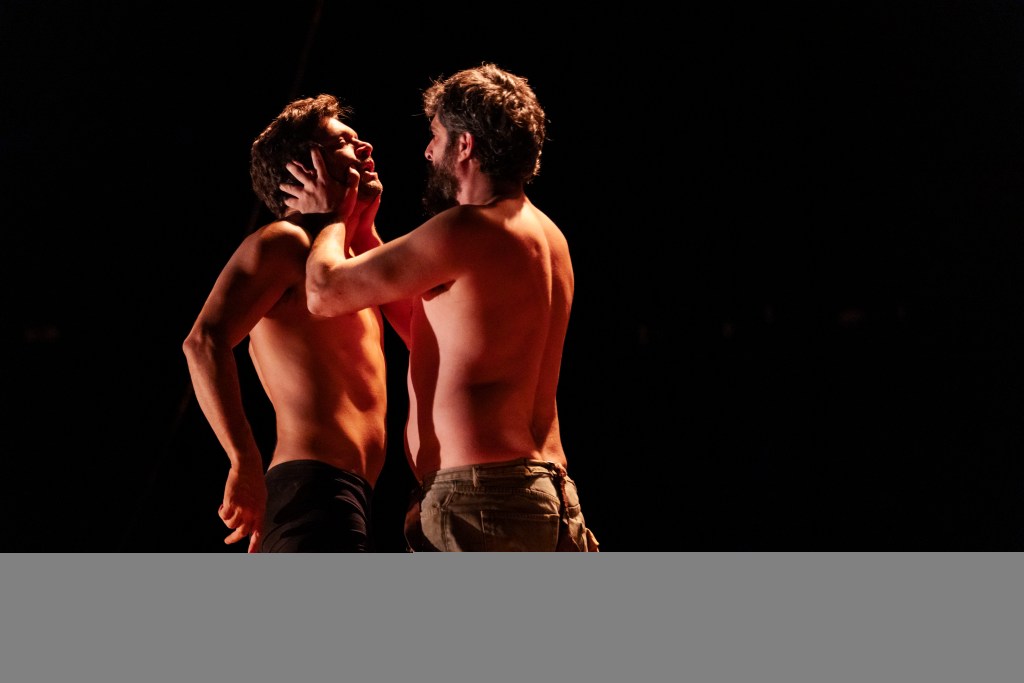
For reasons that become increasingly difficult to understand, Tom remains on the farm and begins helping Francis with the work. Their relationship develops into something deeply uncomfortable, mixing intimidation, violence and a strange intimacy.
Tom remarks that Francis resembles his dead partner, perhaps offering some explanation for his growing attachment. Grief can make people behave irrationally, and the play clearly explores the complicated relationship between desire, loss and abuse. Nevertheless, I struggled to understand why Tom continued to subject himself to such treatment.
Much of the middle section is devoted to the two men working together, wrestling in the mud and even dancing. The performances remain compelling, but I felt these scenes went on considerably longer than necessary. The nature of their relationship had already been established, and I wasn’t convinced that repeatedly exploring it added much to our understanding.
A new character eventually arrives, bringing a significant twist to the story and introducing an almost farcical element. Again, I won’t reveal too much, but the change in dynamic provides some welcome variety.
There are also flashes of humour throughout. The mother’s furious outburst about a bowl of salad particularly amused me, providing an unexpected moment of comedy amid the increasingly oppressive atmosphere.
The staging is certainly distinctive. The muddy tarpaulin provides a bleak setting, and the actors become increasingly covered in mud as the action unfolds. While visually striking, I wasn’t entirely sure how much the mud ultimately added to the storytelling.
The sound design, however, is excellent. I particularly loved the eerie music near the beginning, which immediately establishes an atmosphere of unease. Combined with the stark lighting and minimalist set, it creates a world that feels isolated and threatening despite the absence of conventional scenery.
One small practical criticism concerns the English surtitles. The screens were positioned rather high, meaning I frequently found myself looking up to read the dialogue and then back down to watch the actors. It’s not ideal in a production where facial expressions and physical interactions are so important.
The acting is excellent throughout. Every member of the cast brings conviction and intensity to their performance, even when I found some of the characters’ decisions difficult to understand. Francis is particularly disturbing, while Tom’s vulnerability and emotional confusion are portrayed with considerable sensitivity. The strength of the ensemble is undoubtedly one of the production’s greatest assets.
At two hours without an interval, however, I must admit I was ready for the play to end. That’s not to say I was bored. The performances held my attention throughout, but I found myself wondering whether some scenes, particularly those exploring the relationship between Tom and Francis, could have been shortened. A slightly tighter production might have delivered an even greater emotional impact.
My four-star rating largely reflects the strength of the performances, which are excellent across the entire cast. There is much to admire here, from the atmospheric sound design and inventive staging to the intensity of the acting. While I had some reservations about the pacing and the development of the central relationship, these don’t diminish the commitment and skill of those on stage.
Tom at the Farm is a compelling, disturbing and occasionally darkly funny production that explores difficult subjects with considerable theatrical imagination. It offers a powerful examination of grief, repression and the damage caused by homophobia, brought vividly to life by an outstanding ensemble.
| Show | Tom at the Farm (Tom na Fazenda) |
| Dates & Times | 13 Oct – 17 Oct 2026 7.45pm |
| Venue & Booking | Barbican Website |
Disclosure: I was given a press ticket for this


Leave a Reply