
Brighton Dome Corn Exchange
Review 18 November 2026
Official Synopsis: The award-winning Once Upon a Time in Sokoto tells the epic story of a beautiful but unlikely friendship forged between an enslaved woman and her former master. Differences in faith, culture and heritage are overcome in the face of new enemies, in a gripping family drama set against the backdrop of events leading to the creation of Nigeria.
Wolfe in the Wings review: Theatre has a wonderful ability to bring history to life, particularly when it introduces us to stories we may never have encountered before. Once Upon a Time in Sokoto does exactly that, combining traditional storytelling with drama to explore a fascinating and often disturbing period in northern Nigerian history, just before the arrival of British colonial rule.
With just four performers taking on a multitude of characters, from Nigerian chiefs to British soldiers, the production covers an enormous amount of historical and social ground. At first, I found the constant switching between characters slightly confusing. Although the performers introduced their roles at the beginning, it took a little concentration to establish who was who. However, once I settled into the storytelling, everything became much clearer.
The play explores the social structures and inequalities that existed in northern Nigeria before British intervention. We encounter a rigid class system, the influence of Sharia law, slavery within African communities and the oppression of women, who faced severe restrictions on their freedom, education and opportunities.
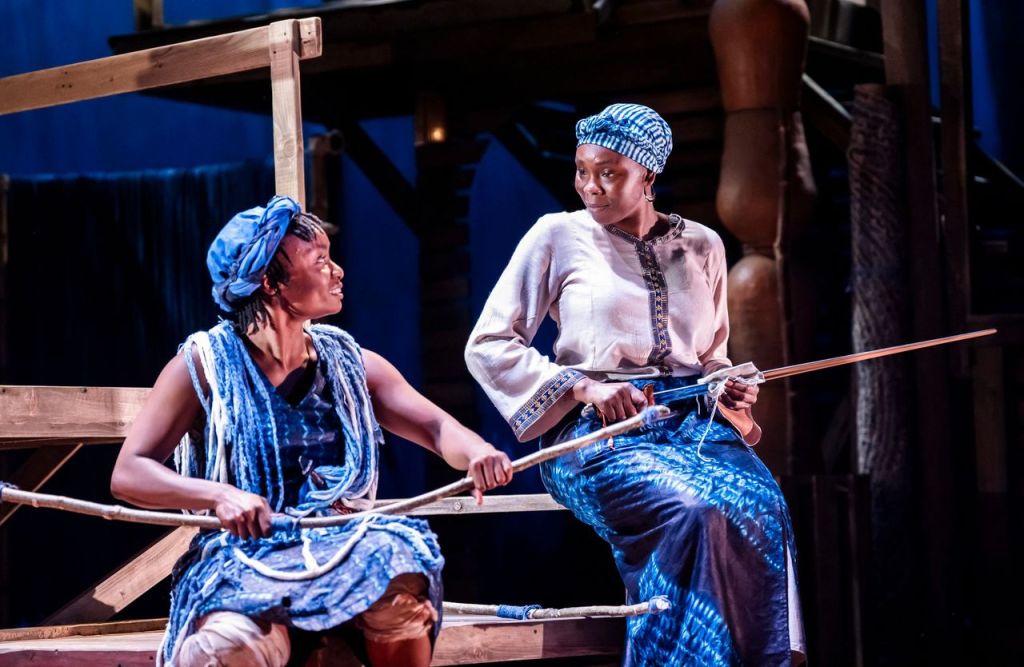
Much of this is explored through the contrasting experiences of Zinari, a wealthy merchant played by Antonia Layiwola, and Nafisa, a woman who begins the story enslaved, played by Adeola Yemitan. Their different positions in society expose the inequalities of the time, while their determination to shape their own futures provides an engaging human story within the wider historical narrative.
What surprised me was how little I knew about this aspect of Nigerian history. We often encounter accounts of British colonialism, but this production also examines the injustices that existed within society before the British arrived. It doesn’t present a simplistic picture of oppression, instead exploring how different forms of power and control affected ordinary lives.
The story also examines the economic pressures that accompanied British colonial expansion. One particularly fascinating episode concerns the flooding of the local economy with imported cowrie shells, which were used as currency. The resulting inflation and devaluation contributed to economic instability. Indigo also features prominently, with the region’s valuable dyeing and textile industries highlighting the commercial wealth at stake. It was fascinating to see how economics, trade and colonial ambitions became intertwined.
An effective storytelling device marks the passing years with announcements of significant events from around the world. These provide historical context while reminding us that the events in Sokoto were unfolding alongside developments elsewhere. There was even a specially included Brighton reference, mentioning the construction of the ice rink that would eventually become the Brighton Hippodrome. A lovely local touch that brought a moment of recognition to the audience.
The four-strong ensemble work extremely well together, switching between characters while also moving and rearranging the substantial amount of scenery themselves. The set is visually appealing and effectively supports the changing locations and situations. I even overheard an audience member enthusiastically praising the staging.
There is a confidence and fluidity to the performances that suggests this production has been carefully honed throughout its tour. The actors work as a cohesive ensemble rather than competing for attention, allowing the storytelling to remain at the heart of the experience.
Although the subject matter is predominantly serious, occasional moments of humour provide some welcome light relief without diminishing the weight of the historical events being portrayed.
I also attended the Q&A following the performance, which added another fascinating dimension to the evening. Audience members originally from other parts of Nigeria spoke about how unfamiliar they were with aspects of the history depicted. It was reassuring, in a way, to discover that I wasn’t alone in learning something new, and it demonstrated how much of a country’s history can remain unfamiliar even to people with personal connections to it.
Once Upon a Time in Sokoto is an engaging and thought-provoking production that succeeds in making a complex historical subject accessible through imaginative storytelling and strong ensemble performances. It doesn’t shy away from uncomfortable truths, whether concerning oppression within Nigerian society or the exploitation that accompanied British colonial expansion.
I left Brighton Dome entertained, better informed and with plenty to think about. For me, that’s one of the most valuable things theatre can achieve.
| Show | Once Upon a Time in Sokoto |
| Dates | 17-21 November 2026 |
| Venue & Booking | Brighton Dome Website |
Enjoyed this review? Help support more independent arts reviews and interviews by contributing towards travel and running costs. Every contribution is appreciated!

Disclosure: I purchased a ticket for this




Leave a Reply